
Working Reflections On Jibrīl, The First Waḥy, And The Heart Of The Prophet ﷺ
First creative draft on new book for the youth.

(Bi-smi llāhi r-raḥmāni r-raḥīm - In the name of Allah, the Rahman the Rahim)
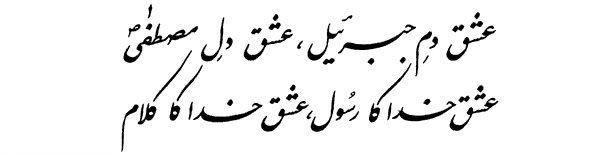
Ishq Dam-E-Jibreel, Ishq Dam-E-Mustafa ﷺ
Ishq Khuda Ka Rasool, Ishq Khuda Ka Kalaam
Love is the breath of Jibril. Love is the heart of Mustafa ﷺ
Love is the messenger of God. Love is the Word of God. - Muhammad Iqbal - Masjid-e-Qurtaba (مسجد قرطبہ) The Mosque of Cordoba
Preparing the Qalb
This is not a finished draft. What follows are working reflections, an exploration in motion, on the relationship between Jibrīl عليه السلام and Rasulullah ﷺ at the moment of the first revelation. In that sense, perhaps it is not apt to call this a draft at all, but a sharing of my thoughts regarding the draft of the current chapter I am working on. I am currently writing a book for the youth that examines this relationship carefully, and at times, I share parts of my creative and intellectual process publicly so readers can see how ideas take shape before they are finalised. I guess what I am trying to show you is how I am imagining things, and then how I rein them in. I believe that as a thinker, I should be able to push my imagination and rational faculties.
At present for this chapter, I am looking closely at the well-known ḥadīth often referred to as the Prophetic Commentary on the Qur’an(Kitāb al-Tafsīr), narrated by ʿĀʾishah رضي الله عنها, which describes the beginning of wahy (revelation).
She begins by saying:
“The commencement of the divine inspiration to Allah’s Messenger ﷺ was in the form of true dreams in his sleep.”
It is important to pause here. Before the Qur’an is revealed, revelation itself has already begun, but in a different mode. The Prophet ﷺ receives true dreams. This is a form of waḥy, yet it is not textual. It is imaginal, symbolic, and experiential. The ḥadīth does not tell us the specific content of these dreams, but it emphasises their truth: every dream came to pass “as clear as bright daylight.” This then means that the dreams were clear and bright, leading towards the revelation of the Quran.
This then makes me wonder if the Prophet ﷺ was aware that something was about to happen. It makes very little sense to me that when reading the Seerah (Life Story of the Prophet ﷺ), the Prophet ﷺ was not aware of his special status. Allah was preparing him ﷺ, and those signs would have made him aware that his life was about to change. This reading for me is important as it highlights that the Prophet ﷺ had agency in this experience that was about to unfold with Jibrīl عليه السلام .
As I said, this matters. The Prophet ﷺ is being prepared for the Qur’an before the Qur’an arrives; he ﷺ is being prepared for his prophethood; he is being prepared for his mission, as from the moment he meets Jibrīl عليه السلام in the Cave of Hira, his life will never be the same. It is also worth noting that the preparation does not come through reading, study, or engagement with prior scripture. It comes through experience, through the inner world, it comes via dreams. Revelation first addresses the heart before it addresses the mind or the tongue. This is also a point worth reflecting upon, as the Prophet ﷺ was unlettered, and so being conditioned and prepared by Allah via dreams is a very unique form of learning and preparation.
This may also help explain why dreams occupy such an important place in the Islamic tradition. Later, the Prophet ﷺ would regularly ask people after Fajr about their dreams. One wonders whether this attentiveness is rooted in his own formative experience, in which waḥy (revelation) began in that form. It also makes me wonder why this sunnah is not practised as often as it should. I, for one, am always reflecting upon my dreams, even if they come from my own mind. There is, after all, something revelatory about dreams.
This is a section in this chapter that I want to explore more. The two themes here are dreams and how much the Prophet ﷺ was aware of the Quran being revealed to him, as it then permits me to perhaps view the narrative of the Prophet ﷺ in the Cave of Hira differently.
Seclusion
After this period of true dreams, the ḥadīth says:
“Then he began to like seclusion.”
Dreams are followed by withdrawal. Inner disclosure led the Prophet ﷺ to go into solitude. Not only that, but it is said in the hadith that he ﷺ “began to like seclusion”. It seems clear to me that the Prophet ﷺ was no longer interested in the dunya and whatever it had to offer. He had by now reached a state in which he ﷺ was aware of what the dunya was. He ﷺ was not searching for anything in the outside world; he ﷺ was searching within, trying to make sense of his experiences, his thoughts, his purpose and calling. He ﷺ recognised that this was inside of him, and that nothing from the outside could address what he ﷺ was searching for. It also begs the question of whether he was waiting…
The key matter is that this happened in Ramadan and during the night of Laylat al-Qadr. This then tells us that this event happened during the holiest month of the Islamic calendar and the night of power. It also tells us that this happened at night.
The Prophet ﷺ retreats to the Cave of Ḥirāʾ, where he worships Allah for many nights at a time, returning only briefly to collect provisions from Khadījah رضي الله عنها. This makes me once again go to what dreams the Prophet ﷺ was having. He was not going to the cave simply to pray, but rather he ﷺ was reflecting and contemplating the dreams he was having. What we also learn is that reflective and contemplative action requires seclusion, and the Prophet ﷺ felt that he needed to detach himself from the bustling city of Mecca, as well as his family. The fact that he ﷺ was going to the cave means that his first wife Khadīja رضي الله عنها was aware of his ﷺ experiences, and this tells us much because when the Prophet ﷺ finally relays his experience to her, she is neither shocked nor surprised. Instead, she reaffirms that his ﷺ experiences made sense to her.
This also raises questions worth lingering over. What did worship look like at this stage? There is no ṣalāh as we know it, no revealed liturgy. What seems most plausible is sustained dhikr, remembrance, a turning of the heart toward Allah. This kind of worship reshapes the inner world. It softens it, empties it, and prepares it. So far, everything in this hadith for me points to the heart and how the Prophet ﷺ was preparing his heart, he was readying himself for what he was anticipating.
The ḥadīth notes that he carried very little food. This was not an indulgent retreat; it was restraint. He returned to Khadījah only to take what was necessary, and then he would go back again. This rhythm continued until one night, in the cave, guidance came to him. Imam Ghazali has mentioned that when the body is not constantly fed, the essence of the soul becomes amplified. It then should not come as a surprise that when Allah mentions increasing taqwa (Consciousness of Allah), He mentions fasting. Fasting or eating less clarifies the mind, and it elevates the human soul over the human body. For me, so far, once again everything points to the soul and the heart.
Jibrīl عليه السلام
In the hadith ʿĀʾishah رضي الله عنها says simply:
“An angel came to him ﷺ.”
This simplicity is significant. At this point, the Prophet ﷺ does not name Jibrīl عليه السلام. Yet he is certain that this being is an angel. There is no confusion, no attribution to jinn, no ambiguity. This clarity aligns with everything that preceded it: the true dreams, the seclusion, the worship and the deep contemplation. This encounter does not rupture his inner preparation; it fulfils it. The Prophet ﷺ had already engaged with angels, especially Jibrīl عليه السلام, prior to his experience in the Cave of Hira. What would have been awe-inspiring is the fact that meeting an angel in such circumstances is a heavy thing, let alone the Messenger of Messengers عليه السلام.
The hadith then says “the angel says to him ﷺ: Iqraʾ.”
The Prophet ﷺ replies: “I do not know how to read/recite.”
This exchange deserves careful attention. There is nothing written. Nothing is placed before him. If someone were to tell us “read” without presenting any text, we would naturally ask: read what? Yet the Prophet ﷺ does not ask that question. Instead, he responds with incapacity: “I do not know how to read/recite.”
However, it can also mean that the Prophet ﷺ was responding by saying “ I am not a reciter”. If understood like this, the Prophet ﷺ is not making the case that he is not lettered, but that he ﷺ may be responding to the ambiguity of what ought to be recited and that he ﷺ is not a reciter.
The word Iqraʾ has come to mean read. This is well attested in the Islamic tradition. Iqraʾ also means to recite; this is also another interpretation, and it also means to understand, as indeed the Quran needs to be understood. But Iqraʾ here could also mean to proclaim, meaning to proclaim the message or the truth of Islam. One could argue in a loose way that it could mean to internalise and take these words into you, meaning to memorise, or embody or absorb these words. If understood this way, the Prophet ﷺ is not only being commanded, he is being set in motion to reflect all that the Quran means, as indeed he becomes the walking Quran. In that sense, Jibrīl عليه السلام was not necessarily asking or commanding the Prophet ﷺ to read per se, he was setting the Prophet ﷺ free.
But I also wonder whether Jibrīl عليه السلام was actually asking the Prophet ﷺ to read? It is natural to assume this if one were to assume that Iqraʾ means to read. But what if Jibrīl عليه السلام is not asking the Prophet ﷺ to read at all and is simply reciting the first word of the āyah of the Surah, and was setting the Prophet ﷺ up for the rest of the āyahs? What if all Jibrīl عليه السلام is doing is simply, gradually easing the Prophet ﷺ to hearing revelation for the first time by not simply reciting the āyahs all in one go, as that could have been jarring, but that Jibrīl عليه السلام was simply preparing the Prophet ﷺ.
This suggests that iqraʾ here may not be a simple command to read text. It may be the opening of something, the first sound of revelation itself. If iqraʾ is understood as the beginning of the āyah rather than a standalone imperative, then the Prophet ﷺ may not be refusing a command so much as responding honestly to an unfamiliar mode of engagement. One may argue that Jibrīl عليه السلام was helping the Prophet ﷺ to memorise the āyahs.
I really want to expand on the āyahs that are revealed to the Prophet ﷺ as these words of Allah were not simply for the Prophet ﷺ to memorise; they were also directly addressing him at the time.
My final point is that the hadith does not suggest that these words were yelled at the Prophet ﷺ, so maybe Jibrīl عليه السلام whispered these words, which once again does not sound like a contradiction to me when we understand what the word wahy means.
Was the Prophet ﷺ Being Squeezed?
Then comes the physical encounter:
“He took hold of me and pressed me until I reached the limit of my strength, then he released me.”
The verb used is ghaṭṭanī. This word is often translated as “pressed” or “squeezed,” but its semantic range is wider. It can mean to envelop, to cover completely, to overwhelm, like water engulfing something.
This distinction matters as the ḥadīth does not say that Jibrīl عليه السلام appeared in human form, nor does it describe limbs or posture. The Prophet ﷺ knows this being is an angel. So what does it mean to be “pressed”?
I guess what I want us to imagine is that, imagine being in a small cave, in the dark, and engaging with another being. If it were in a human form, then maybe the hadith would have mentioned a struggle, which it doesn’t. Jibrīl عليه السلام does not tell the Prophet ﷺ that he is Jibrīl عليه السلام. If the Prophet ﷺ had engaged with Jibrīl عليه السلام in a human form, he ﷺ might have asked him questions like, who are you, what are you doing here, let go of me and so on. In that sense, Jibrīl عليه السلام, who is the spirit, was infusing perhaps the Quran into the Prophet ﷺ and the Prophet ﷺ felt like he was submerged, from all sides, where he ﷺ could not breathe, as he was possibly not only feeling the stress of Jibrīl عليه السلام but the Quran also entering his heart.
Perhaps this was not merely a physical squeeze, but an encompassing and totalising experience that consumed awareness itself. Something overwhelming, preparing him for what his heart was about to receive. I would really like to explore this aspect of the hadith.
This happens three times. Each time, iqraʾ. Each time, the same response. Each time, the same overwhelming embrace. I accept that this act was letting the Prophet ﷺ know that he ﷺ was not dreaming, that this was real, and this was not a state of sleep paralysis, but an actual encounter. However, my ideas above come from the ayah below and many others in which Allah says:
Surah ash-Shuʿarāʾ (26:193–194)
نَزَلَ بِهِ الرُّوحُ الْأَمِينُ عَلَىٰ قَلْبِكَ
“The Trustworthy Spirit brought it down upon your heart.”
The experience for me in the Cave of Hira does not contradict what Allah says here and in other places. For me Jibrīl عليه السلام was not instilling fear in the Prophet ﷺ , but rather preparing his ﷺ heart for the revelation to enter it. It’s just that the Quran and the Angel were heavy on him ﷺ, and we know this from many hadith of how the weight of the Quran impacted the Prophet ﷺ.
Surah al-Alaq
Now as we know, after the third time Jibrīl عليه السلام recites the rest of the ayats, where Allah says:
اقْرَأْ بِاسْمِ رَبِّكَ الَّذِي خَلَقَ
“Iqraʾ bismi rabbika alladhī khalaq…”
Read in the name of your Lord who created —
خَلَقَ الْإِنسَانَ مِنْ عَلَقٍ
Khalaqa al-insāna min ʿalaq
Created man from a clinging substance.
Now the content matters deeply. Allah does not begin with law, command, or abstract theology. He begins by grounding the Prophet ﷺ in two realities.
The first is Rabb, your Lord: the One who nurtures, sustains, and brings things to completion. I am assuming that the Prophet ﷺ was contemplating about this.
The second is creation, specifically the creation of the human being from something utterly humble. What is also important is that Allah speaks of Himself as the creator of all things, and I am assuming that this is also a subject that the Prophet ﷺ was contemplating.
Adam عليه السلام is not mentioned by name in this Surah. Instead, the human being is reduced to origin, dependency, and need. The clotted form of insan is not just about being humble but it is also a blessed form. What I also find unique about this is that there is a hadith that mentions that there is an angel in the womb with the child, and I get this type of metaphor in my mind regarding the Prophet ﷺ in the cave. That is when he ﷺ leaves the cave, he ﷺ entres the light of the real world, and he ﷺ never returns to the cave, now that he ﷺ is somewhat reborn for his work as the final messenger.
Allah was telling His Prophet ﷺ that He created insan, the forgetful being, from a clot. That insan when conceived is in the most humble and vulnerable state. The contrast between the first part of this surah and when Allah mentions Iqraʾ again is of two very different stages and phases of human life. The first is when a person is in the womb of the mother; the second, as I will explain, is when we become agents of knowledge.
Then Allah speaks of generosity, al-akram. That generosity is expressed through teaching: by the pen, and through knowledge human beings did not previously possess.The second time Allah says Iqraʾ , He is not simply saying to read again.
“اقْرَأْ وَرَبُّكَ الْأَكْرَمُ”
“Iqraʾ wa rabbuka al-akram”
Read, and your Lord is the Most Generous —
“الَّذِي عَلَّمَ بِالْقَلَمِ”
“Alladhī ʿallama bil-qalam”
Who taught by the pen —
“عَلَّمَ الْإِنسَانَ مَا لَمْ يَعْلَمْ”
“ʿAllama al-insāna mā lam yaʿlam”
Taught man that which he knew not.
“كَلَّا إِنَّ الْإِنسَانَ لَيَطْغَىٰ”
“Kallā inna al-insāna la-yaṭghā”
No! Indeed, man transgresses.
This is striking for me. Human elevation does not lie in origin, but in the knowledge granted by Allah. Everything that is known is known only because Allah allows it to be known, and indeed Allah is the Most Generous. I would really like to flesh out this section of this chapter inshallah, as I really feel that understanding the parts of the Surah in relation to this narrative is important.
Reaching Home
When the Prophet ﷺ leaves the cave, his body trembles. The muscles between his neck and shoulders shake. He walks the long path back to Makkah, not in a daze, but with awareness of what has occurred.
When he reaches Khadījah رضي الله عنها, he ﷺ says:
“Cover me.”
This is another echo. He was enveloped in the cave, and there were layers wth him ﷺ being in the cave and then being enveloped by Jibril عليه السلام. It reminds me of Yunus عليه السلام in the stomach of the whale and being in layers of darkness. After he ﷺ seeks covering again, safety, grounding, reassurance, perhaps? When the fear subsides, he speaks, wondering aloud what has happened to him. But I also want to understand this action within the context of Surah Al-Muzammil, which means the one wrapped up (The Prophet ﷺ), especially as that Surah mainly points to praying at night. At the moment, I haven’t developed this section yet.
Anyway, Khadījah رضي الله عنها responds with certainty. She does not hesitate. She lists the Prophet’s ﷺ character and his truthfulness, his care for others, and declares that Allah would never disgrace such a person. She takes him ﷺ to Waraqah ibn Nawfal, her cousin, who was a learned convert to Christianity and a person who wrote in Arabic.
An essential point mentioned in the hadith is that Waraqah is blind. This detail is important for two reasons. First is the fact that he asks the Prophet ﷺ to relay his experience in the Cave of Hira. Secondly, he has to listen to the Quran, and from hearing it as the word of Allah, the word of truth, the miracle for what it is, Waraqah understood the Prophetic mission. Thus, Waraqah’s conclusions were made on two matters. What the Prophet ﷺ experienced and what he heard in the case of wahy. This is an important point as the Quran is indeed a miracle for the ears, unlike the miracles of the Prophets that came before the Prophet Muhammad ﷺ. The Quran indeed is a linguistic miracle, and there is no doubt about that.
The second detail is also essential for me, as the simple English translation points to Waraqah asking the Prophet ﷺ what he saw, but given the circumstances, that sounds strange. The Prophet ﷺ was in the darkness of the cave, and when reading this hadith, the Prophet ﷺ doesn’t really describe what he saw. In that sense, a better rendering perhaps is that Waraqah was asking the Prophet ﷺ what he experienced, or felt or encountered. This again is not about vision. And this is a point I want to flesh out some more, which is that today we only see the validity of an experience based on sight, and yet it is not the only sense that we use. In fact, the Quran deals with the ears. Sight is interesting as one can close one’s eyes, but we can’t really close our ears in the simplest sense. In the darkness of a cave, sight would reveal little. Experience reveals everything. If anything throughout this hadith sight is not the main sense at all, and yet many of the narratives I have come across have been based around imaginations based on sight.
When Waraqah hears the account and thus likely hears the Qur’an itself recited, he recognises it immediately. He goes on to say that “This is the same Namūs sent to Mūsā عليه السلام”. This is an interesting point, as on many occasions, narratives of Mūsā عليه السلام rhyme with the Prophet Muhammad ﷺ. Not simply in terms of the various objectives the two prophets had, but also in regard to their own experiences in a cave when they received revelation. It is here that I would also like to examine the narrative of Mūsā عليه السلام, and see where the similarities and differences are, as this may help me to flesh out the experiences of the Prophet ﷺ.
Waraqah warns of opposition. He expresses longing to be younger, to support the Prophet ﷺ when his ﷺ people reject him. And then, shortly after, Waraqah dies, and the revelation pauses. This is worth noting too, that first Khadija رضي الله عنها recognised the Prophet’s ﷺ experience, and attested that he ﷺ was indeed speaking the truth as she knew first hand he ﷺ was al-Amin. Then Waraqah simply confirms what she had known and declared his own support for the Prophet ﷺ. And even in his death, there is Allah’s wisdom in it, for had Waraqah stayed alive, the Prophet ﷺ would have been accused of taking wahy from him. But the fact that Waraqah died soon afterwards points to the Prophet ﷺ being independent from this accusation.
And there was a pause for the Prophet ﷺ, and that pause, too, invites reflection.
So far, these are my explorations, and I am working on developing them for my book chapter. I will not be writing in this style, of course, as I want to write it in a narrative style. But I wanted to share my thought process on this chapter. If any of you have any thoughts or concerns, please do write them in the comments. I really hope that this new sincere project will offer my own voice to the relationship between Jibril عليه السلام and Rasulullah ﷺ.
And truly Allah knows best.
MashaAllah this is brilliant. While reading I had a few thoughts I'm shy to share. Im not qualified enough to make such comments, but its coming from my heart. Please accept it.
As we know from Seerah that Jibril AS had already washed the Prophet's heart when he was a child, and also before the journey of Isra wal Mairaj, so was this interaction different in that sense? When Allah revealed the Quran, the weight of which the moutains could not bear, the Prophet's (SAW) heart needed preparation.. in the form of dreams, and then being squeezed by the angel. This preparation is different than washing his heart at 2 other significant occasions.
Secondly as you say Iqra may have been repeated as the 1st verse. And so when the Prophet (SAW) responds, "i dont know how to read" maybe it means he wasnt ready (in his heart) for it until he was pressed by the angel.
As i said im not quakified enough to be saying this. May Allah forgive my shortcomings.
Ma'as Salama